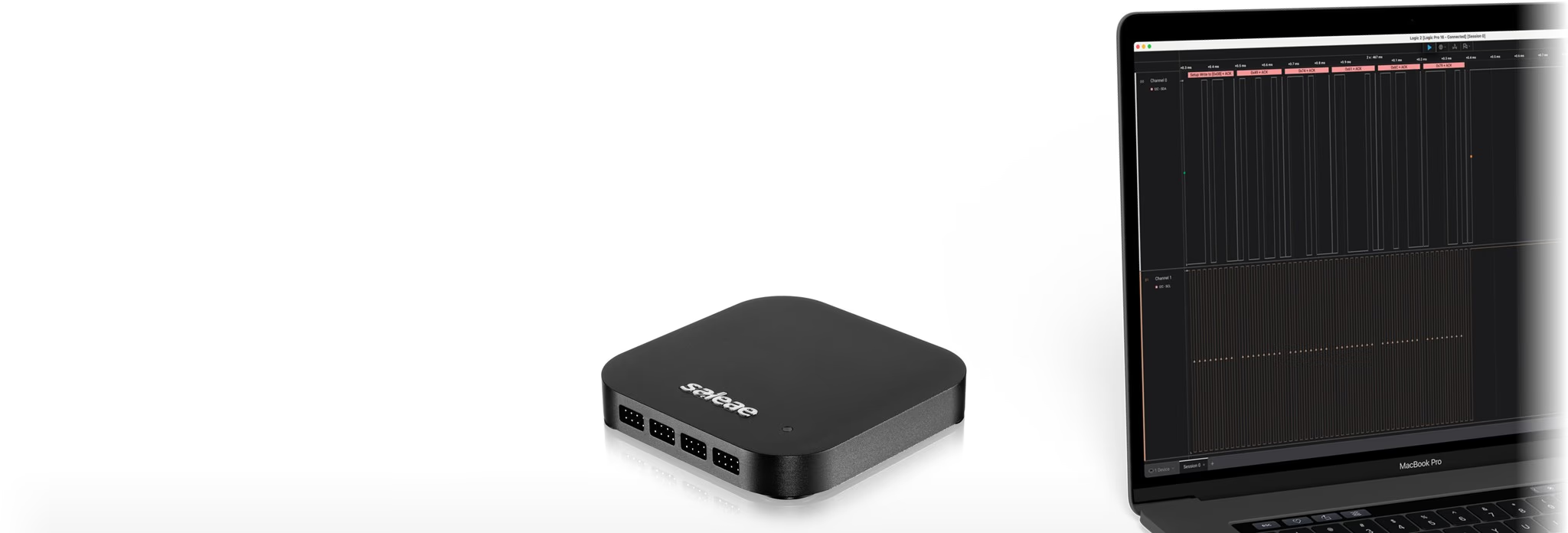
Talk to your logic analyzer.
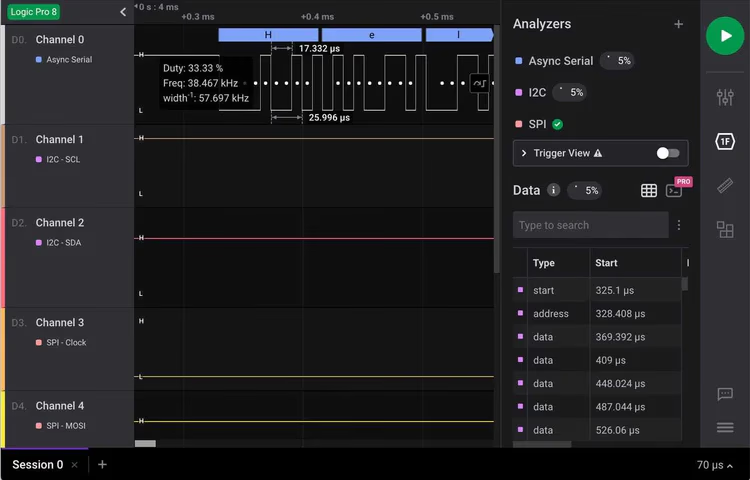
Logic 2 now speaks MCP — connect it to Claude or Codex and control your analyzer with natural language.
Start captures, decode protocols, export data, and ask questions about your signals — all in natural language. No scripts, no boilerplate.
claude mcp add --transport http logic2 http://127.0.0.1:10530Requires Logic 2 running locally with the MCP server enabled. See the docs for setup details.
Craftsmanship
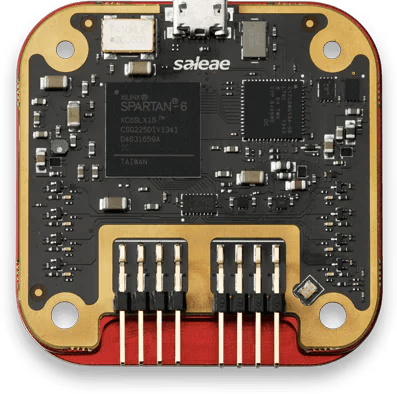
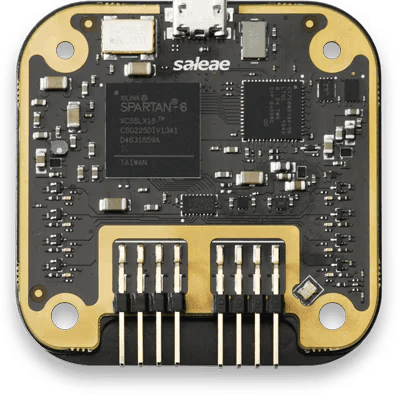
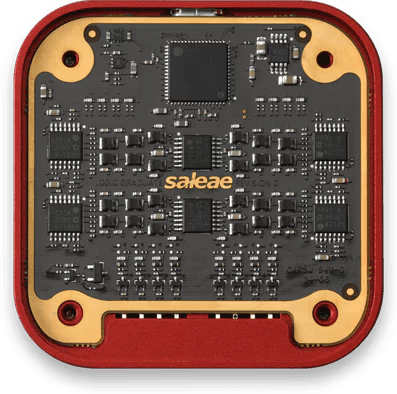
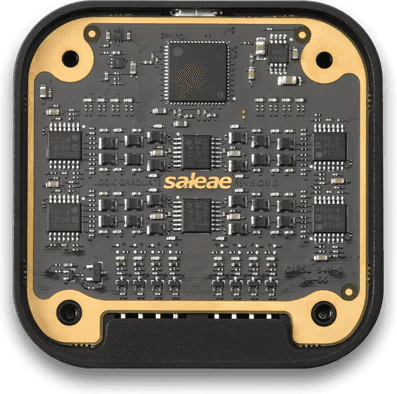
We really care about this stuff. When you get Logic in your hands, you'll be able to tell.

Logic
8shown
All the specs.
Inputs
Digital
Occasionally asked questions
What comes in the box?
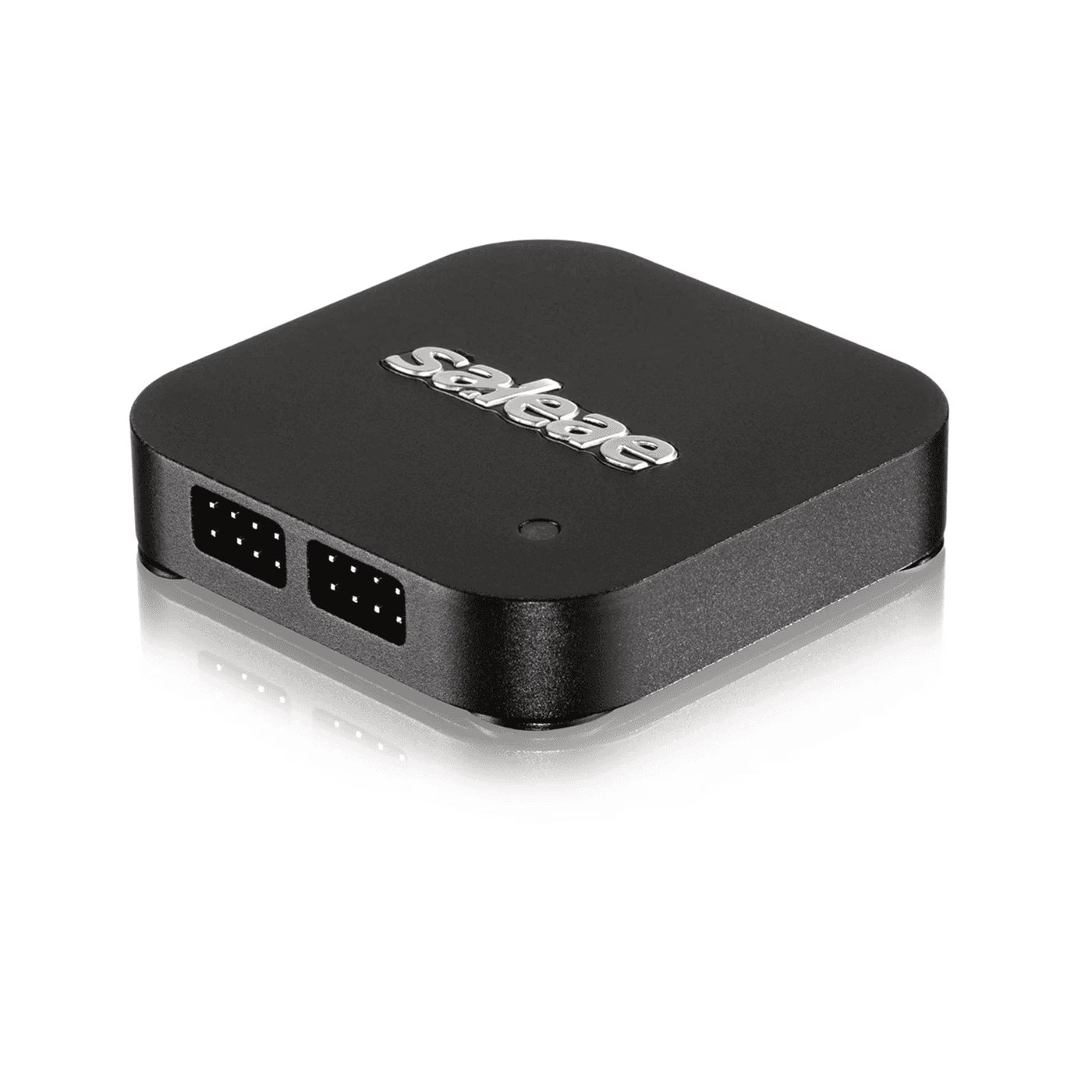
When you receive your Logic, it will come in a custom neoprene zippered case, and include a USB cable as well as the test clips (two test clips for every input) and test probes you need.
When and where will my order ship from?
Shipping within the United States
Orders placed before 1PM CT are shipped same business day (M-F) from Austin, Texas via FedEx. Customers receive a shipping confirmation, including a tracking number, when their order ships. Shipping is offered at low, fixed rates for both 2-day air and overnight options.
Shipping within Europe
Orders placed before 9AM CEST are shipped same business day (M-F) from the Netherlands via UPS. Customers receive a shipping confirmation, including a tracking number, when their order ships. Shipping is offered at low, fixed rates and includes import taxes and duties. VAT exemption can be claimed on the cart page before reaching checkout, which automatically removes VAT from the order.
Shipping within the United Kingdom
Orders placed before 11AM BST are shipped same business day (M-F) from the United Kingdom via Parcelforce. Customers receive a shipping confirmation, including a tracking number, when their order ships. Shipping is offered at low, fixed rates and includes import taxes and duties. A business VAT ID may be added to the order on the cart page before reaching checkout, which automatically includes the VAT number on the invoice.
Shipping Worldwide
Orders placed before 1PM CT are shipped same business day (M-F) from the United States via FedEx. Customers receive a shipping confirmation, including a tracking number, when their order ships. Shipping is offered at low, fixed rates and includes import taxes and duties for most destinations.
Does Logic replace an oscilloscope?
Not exactly, no. However, it could be much better than an oscilloscope for many applications – especially applications where a microcontroller is interacting with an analog signal in some way, such as reading an analog voltage or controlling an analog voltage.
I have one of the previous generation products. Will the new software work with it?
Yes, the new software updates are backwards compatible with the original Logic and Logic16!
What’s next for the software? I have ideas!
Awesome, please share your ideas on our community forum!
Your questions are welcome here



From help with placing an order to the most obscure technical question, we're here to help. Your technical questions are answered by EEs and CSEs with a deep knowledge of our hardware, software, and embedded applications.
Contact Us3-Year Warranty and 180 Days for Returns

Your new Logic is covered against absolutely any malfunction, regardless of cause, for three years. Replacement units ship immediately, and shipping charges are on us. Just drop us a line.
Decide within 180 days that our products aren't for you, and return them for a full refund, including shipping. To arrange for a replacement or return, just contact us.
Over 35,000 embedded developers actively use Logic every month.